
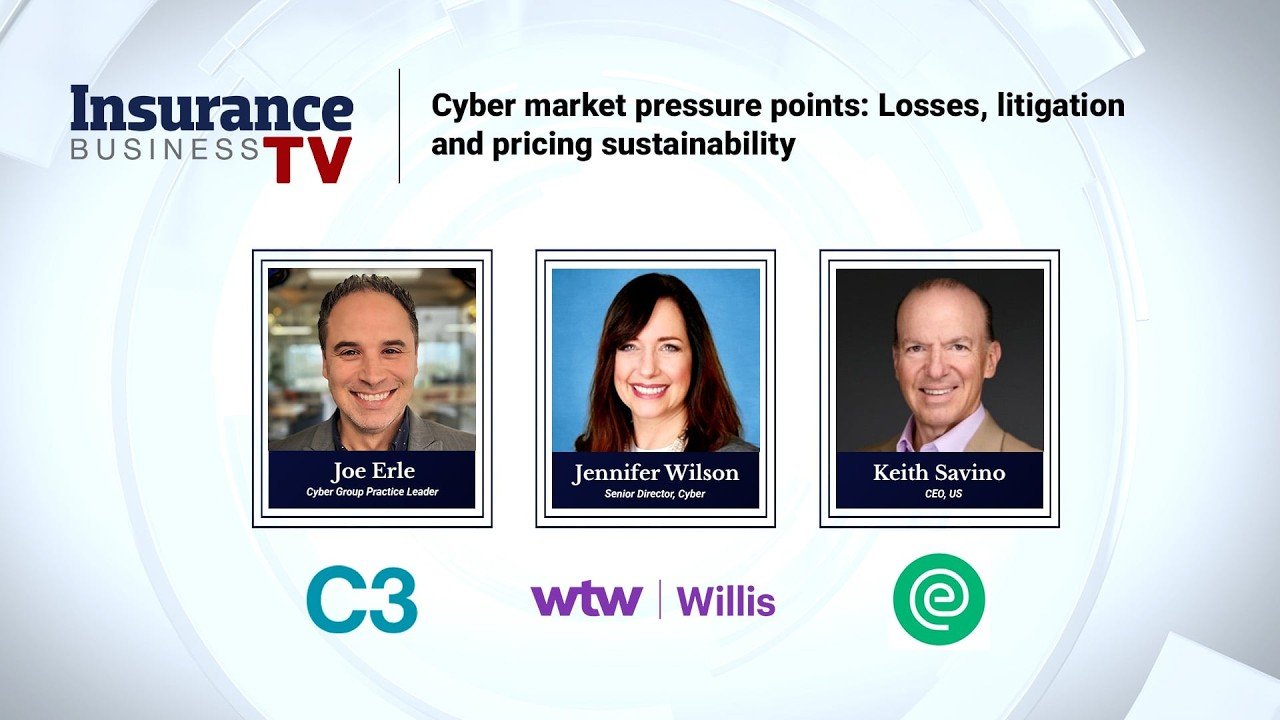
Underwriting is best, protection is broader, and shoppers who as soon as ignored cyber now demand it. The query is whether or not insurers are overreaching within the fallacious course
Keith Savino has been within the cyber insurance coverage market lengthy sufficient to recollect when the appliance requested what number of e mail addresses the applicant had. The reply, in these early days, was typically AOL and Prodigy.
“I really like the evolution of the cyber business over the previous 25 years,” mentioned Savino, CEO US at Emergence Insurance coverage, at a latest Insurance coverage Enterprise cyber roundtable. “I believe we have gotten higher at doing a number of issues, not worse.”
Purposes moved from one web page – asking questions largely irrelevant to precise cyber danger – to 22-page behemoths so burdensome they assured non-completion. Now they sit someplace extra helpful: combining streamlined questioning with third-party knowledge and safety scanning that makes underwriting extra exact reasonably than merely extra demanding.
Proactive monitoring instruments have modified the character of the product itself. Cyber insurers are not purely reactive monetary backstops. They’re a part of an ongoing safety posture – monitoring shoppers all year long, flagging vulnerabilities, connecting them with incident response sources. That shift has contributed to what Savino describes as cyber turning into a normal possibility reasonably than a specialty line.
“It is not a specialty line,” he mentioned. “We’re nonetheless cool, by the best way. Even when we’re not particular anymore, we’re nonetheless cool.”
From ‘do not discuss cyber’ to ‘it is your present now’
“Previous to the pandemic, no one was speaking about MFA or EDR, and now we have all needed to develop into cybersecurity specialists in an effort to promote cyber,” mentioned Jennifer Wilson, senior director, cyber at WTW. “So I do agree the evolution is making all of us higher.”
Her private marker for the way far cyber has travelled within the room is probably the most pointed. “I bear in mind again within the day, pre-pandemic, when the producers would say, ‘Jennifer, you’ll be able to come to the assembly, however we’re most likely not going to speak about cyber. And we’re actually going to concentrate on D&O.’ And now the D&O people are sort of within the backseat.”
Purposes now concentrate on controls that truly predict loss – MFA adoption, EDR deployment, backup practices, incident response planning – reasonably than throwing each query on the wall. The result’s underwriting that works.
“I believe the underwriting goes very nicely,” mentioned Joe Earle, cyber group follow chief at C3 Threat and Insurance coverage Providers. “We have seen report lows of ransomwares paid, in order that’s signal that prospects aren’t paying as many ransoms.”
The lane downside
Towards that real progress, Earle launched the market’s most pointed self-criticism.
“I believe the place the business may be going fallacious is that we’re making an attempt an excessive amount of to be cybersecurity firms as a substitute of simply staying in our lane as cyber insurers. I believe cyber insurers and cybersecurity firms needs to be working collectively, however not making an attempt to take over turning into cybersecurity firms,” he mentioned.
Over the previous a number of years, cyber insurers have added pre-breach companies, safety scanning, vulnerability assessments, incident response retainers, and vendor panels to their choices. The intent is defensible. The execution danger is that insurers start making implicit representations about their shoppers’ safety posture – or competing with the safety distributors they’re ostensibly partnering with – in ways in which create their very own legal responsibility and complicate the claims relationship when a breach happens.
The excellence Earle attracts is obvious: working collectively, not taking on. A cyber insurer that connects shoppers with applicable safety sources is including worth inside its competence. A cyber insurer that positions itself because the safety resolution creates expectations it might not be outfitted to fulfill.
Know what you are promoting
“In the event you’re knowledgeable insurance coverage agent immediately and also you’re coping with the insured, your insured is maturing on daily basis of the week, and so they’re getting smarter and smarter,” Savino mentioned.
That shopper sophistication is the argument for dealer experience, not towards it. Purchasers coming to renewals having used AI to match insurance policies and ready lists of protection questions have raised the bar for what they count on from their dealer.
The response is to not out-research them in actual time. It’s to know the product nicely sufficient to guide the dialog reasonably than comply with it. That requires real subject material experience – not simply on the underwriter degree, the place it has clearly improved, however on the level of sale, the place the hole between what’s being bought and what’s really coated stays consequential.
Savino put the usual merely: “You’ll want to know what’s in there, and it’s worthwhile to know what you are promoting.”


